Dental Bridges in Hays, KS | Seamless Tooth Replacement at eyeSMILE
Dental Services
Missing one or more teeth can make everyday activities like speaking clearly or chewing your favorite meals uncomfortable, while also causing surrounding teeth to shift out of alignment over time. At eyeSMILE, located right on the Bricks of Downtown Hays, our dental team provides custom-crafted dental bridges to restore your biting power, protect your bite alignment, and complete your smile.
Dr. Jarrod E. Jones, DDS, and Dr. Christine M. Thomas, DMD, use advanced digital imaging and high-grade dental ceramics to design restorations that blend invisibly with your natural enamel, providing a comfortable, fixed solution for tooth loss.
What Is a Dental Bridge?
A dental bridge is a fixed (non-removable) dental restoration used to replace one or more consecutive missing teeth. The bridge literally “bridges the gap” left by a lost tooth. It typically consists of an artificial tooth—known as a pontic—fused between two custom dental crowns. These crowns are securely cemented onto the healthy teeth (or dental implants) on either side of the empty space, creating a sturdy, permanent anchor.
Types of Dental Bridges Available at eyeSMILE
Depending on the location of your missing tooth, the health of your adjacent teeth, and your personal goals, we offer several specialized bridging options:
1. Traditional Fixed Bridge
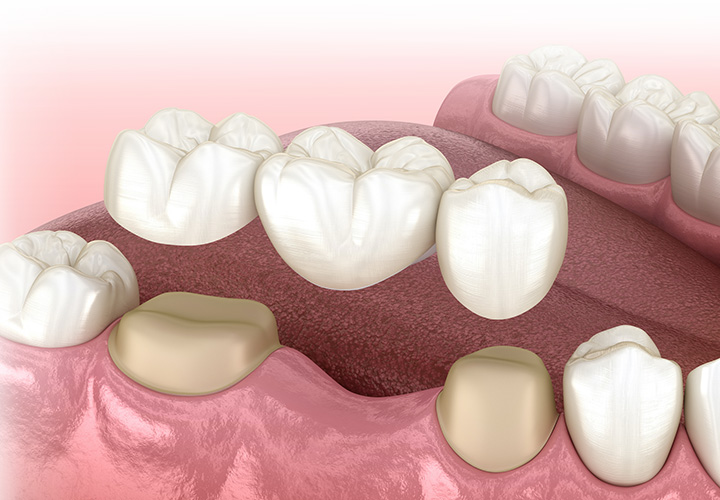
The most common type of bridge. It consists of an artificial tooth held in place by dental crowns cemented onto each of the adjacent natural teeth (abutments). Traditional bridges are exceptionally strong and are ideal for replacing molars and premolars.
2. Maryland (Resin-Bonded) Bridge
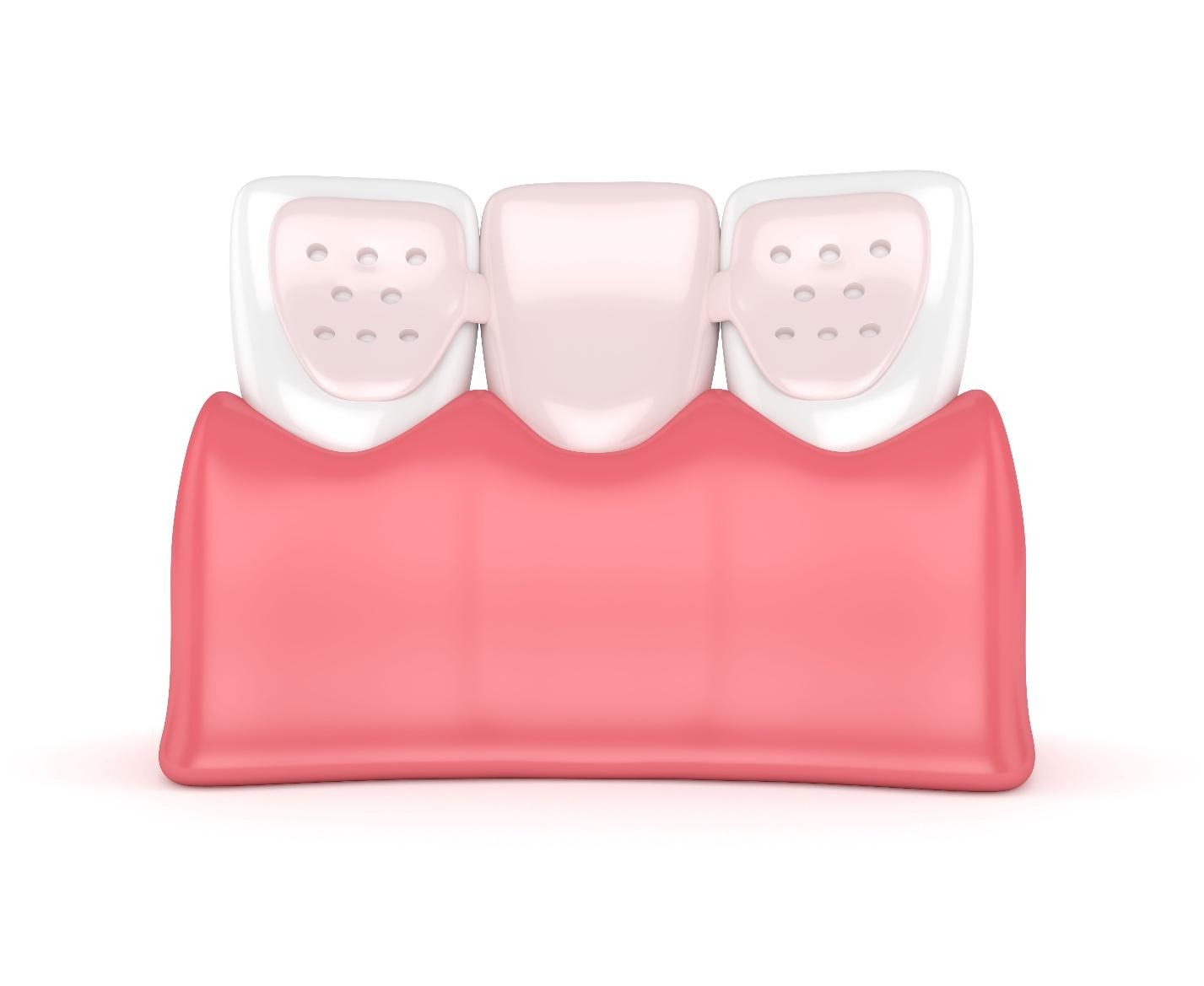
Often used to replace missing front teeth where biting forces are lower. Instead of using full crowns over adjacent teeth, a Maryland bridge uses a custom porcelain or metal framework with “wings” that are bonded securely to the back of your neighboring teeth. This is a highly conservative option that preserves natural enamel.
3. Cantilever Bridge
Used when there is an adjacent natural tooth on only one side of the missing tooth gap. While less common today due to the leverage forces it places on a single tooth, it can be an effective solution for specific areas of the mouth with low chewing stress.
4. Implant-Supported Bridge
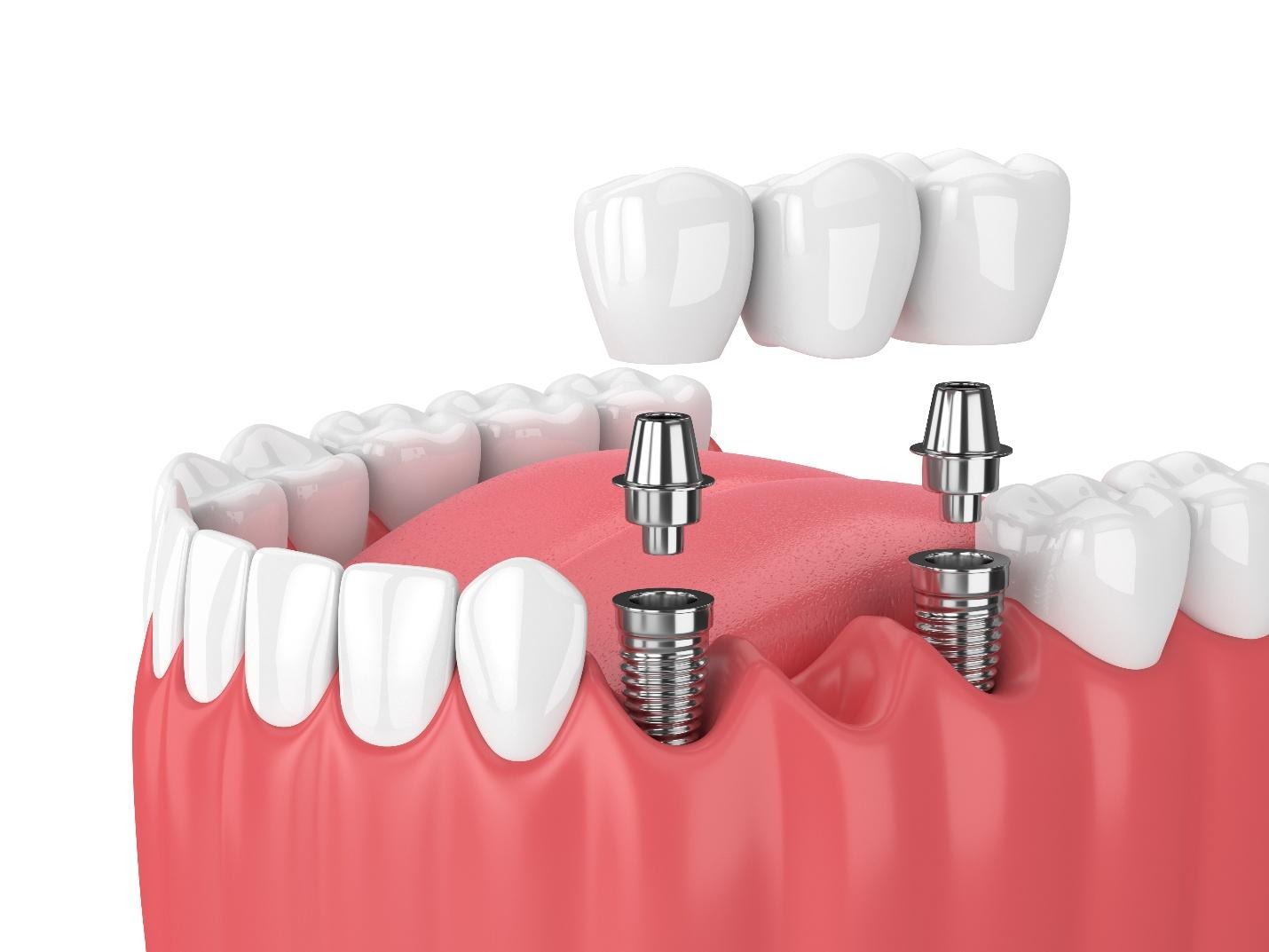
For patients missing multiple teeth in a row, an implant-supported bridge is anchored by titanium dental implants rather than natural teeth. This provides maximum stability and prevents jawbone loss without needing to alter nearby healthy teeth.
Are You a Candidate for a Dental Bridge?
During your consultation at our 1300 Main Street office, Dr. Jones or Dr. Thomas will conduct a thorough examination using digital X-rays to determine the best approach for your smile. You are likely an ideal candidate for a dental bridge if you:
- Have one or more consecutive missing teeth.
- Have healthy, structurally sound natural teeth on either side of the gap to support the bridge crowns.
- Are free of active periodontal (gum) disease or severe tooth decay.
- Prefer a non-surgical, fixed tooth replacement completed in just a few weeks.
- Aren’t a candidate for dental implants due to medical conditions or thin jawbone density.
Your Treatment Timeline & Recovery
Getting a custom dental bridge at eyeSMILE is typically completed in two comfortable visits spaced about two to three weeks apart.
Visit 1: Preparation & Digital Impressions (90-120 Minutes)
- Comfort First: We thoroughly numb the area with a topical gel prior to administering local anesthesia to ensure you feel minimal discomfort.
- Tooth Shaping: The two adjacent abutment teeth are gently reshaped by removing a small amount of enamel to make room for the supporting crowns.
- Precision Scans: We take highly accurate digital impressions of your teeth to send to our master dental lab, where your custom bridge will be crafted to perfectly match the shape and shade of your smile.
- Temporary Protection: We place a temporary bridge to protect your exposed teeth and gums while your final restoration is being made.
Visit 2: Placement & Final Fitting (45–60 Minutes)
- Once your permanent ceramic bridge arrives from the lab, we remove the temporary bridge and carefully clean the area.
- Dr. Jones or Dr. Thomas will check the new bridge for a flawless color match, exact fit, and comfortable bite alignment.
- Finally, the bridge is permanently bonded into place with dental cement, leaving you with an immediately functional, beautiful smile.
Recovery & Daily Aftercare
Recovery is minimal. You can eat and speak normally almost right away, though you may experience slight temperature sensitivity in the abutment teeth for a few days as they adjust.
Because a dental bridge is a single connected piece, regular floss cannot snap down between the artificial tooth and the crowns. To keep your gums healthy and prevent decay under the bridge, our hygiene team will show you how to use:
- Floss Threaders: Specialized tools that guide floss underneath the artificial tooth.
- Interdental Brushes: Small, flexible brushes designed to clean between the crowns and gumline.
- Water Flossers: An effective way to flush away plaque and food debris using a gentle stream of water.
Dental Bridges vs. Dental Implants: Which Is Right for You?
When comparing tooth replacement options, many patients weigh the differences between a fixed bridge and a dental implant. Both are excellent options offered at eyeSMILE, but they serve different clinical and financial needs:
| Feature | Custom Dental Bridge | Dental Implant & Crown |
|---|---|---|
| Treatment Timeline | Fast: Completed in 2 to 3 weeks over 2 visits. | Gradual: Takes 3 to 6 months to allow jawbone healing. |
| Surgical Requirement | No Surgery Required: Completely non-invasive. | Minor Surgery Required: Titanium post placed into jawbone. |
| Impact on Adjacent Teeth | Requires reshaping neighboring teeth for crown support. | Independent structure; adjacent teeth are untouched. |
| Bone Preservation | Sits above the gumline; does not prevent natural bone loss in the empty gap. | Stimulates the jawbone, actively preventing bone loss over time. |
| Expected Lifespan | 10 to 15 years with excellent oral hygiene. | Titanium post lasts a lifetime; crown lasts 15–20 years. |
| Upfront Investment | Lower initial cost; often heavily covered by insurance. | Higher initial investment; superior long-term durability. |
How Much Do Dental Bridges Cost in Hays, KS?
At eyeSMILE, we believe in complete financial transparency. The investment required for a dental bridge depends on the number of teeth being replaced, the type of bridge selected, and the custom materials used (such as all-ceramic, zirconia, or porcelain-fused-to-metal).
Here are general price ranges for dental bridges at eyeSMILE before dental insurance is applied:
| Type of Restoration | Estimated Investment Range | What It Includes |
|---|---|---|
| Traditional 3-Unit Bridge | $4,200 – $5,800 | Two custom supporting crowns and one artificial replacement tooth |
| Maryland (Resin-Bonded) Bridge | $1,800 – $2,500 | One artificial tooth with conservative bonded framework wings |
| Implant-Supported Bridge (3+ Teeth) | $10,000+ | Two titanium implant posts anchoring a multi-tooth ceramic bridge |
Insurance & Flexible Financing
Dental insurance plans routinely categorize dental bridges as major restorative care, which typically means they cover 50% of the cost after your deductible is met. Our front-office team will happily verify your insurance benefits, calculate an estimate of your out-of-pocket investment prior to treatment, and file all claims on your behalf. We also utilize third-party financing to ensure your care fits comfortably within your budget.
Frequently Asked Questions About Dental Bridges
Yes! We use high-strength dental ceramics and zirconia that mimic the natural translucency and light-reflecting properties of real tooth enamel. We carefully shade-match the bridge to your adjacent teeth so no one will ever know you had a missing tooth.
Absolutely. Once permanently cemented, a dental bridge restores full chewing function. We recommend cutting hard foods (like raw carrots or apples) into smaller pieces for the first few days while you adjust, but you can quickly return to enjoying all your favorite meals.
If the anchor teeth (abutments) develop decay, the seal of the bridge can fail, potentially requiring the bridge to be removed and replaced. This is why thorough daily cleaning underneath the bridge and routine six-month dental checkups at eyeSMILE are essential for protecting your investment.
No. The preparation procedure is performed under local anesthesia, ensuring you feel nothing more than gentle vibration and pressure. Post-treatment soreness is minor and easily managed with over-the-counter pain relievers like ibuprofen or acetaminophen for a day or two.
Schedule Your Restorative Consultation Today
Don’t let a missing tooth compromise your bite, speech, or confidence. Experience the patient-centered care that makes eyeSMILE a trusted name in family dentistry across Ellis County.
- Call Our Office: 785.621.4242
- Visit Us: 1300 Main Street, Hays, KS 67601 (On the Bricks of Downtown Hays)
- Email: [email protected]