Gum Disease
Dental Services
Gum Disease Treatment: Protecting Your Foundation
At eyeSmile, we focus on more than just teeth; we focus on the foundation that holds them in place. Gum disease is the leading cause of tooth loss in adults, but because it is often painless in the early stages, many patients don’t realize they have it until significant damage has occurred.
The Most Common Cause of Tooth Loss
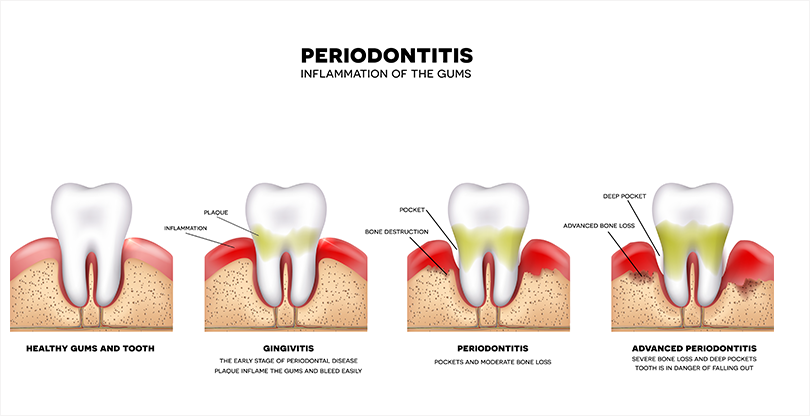
Gingivitis is characterized by red, bleeding, and inflamed gums surrounding the teeth. Periodontal disease shares the same characteristics but is also accompanied by bone loss. Plaque, a sticky substance that forms in the mouth from food, saliva, and bacteria, coats the tooth above and below the gumline, irritating the gum tissue. If not removed, plaque hardens into a substance called calculus that is very difficult to remove. Eventually, the bacteria in the plaque and calculus can destroy the gum tissue and underlying bone surrounding the teeth. This creates deep pockets, bone loss, and possible loss of your teeth. Periodontal disease is responsible for about 70 percent of adult tooth loss.
Think of it as if bugs are eating away at the soil around a tree trunk. Eventually, they eat away all of the soil and part of the trees roots, causing the tree to collapse.
The Problem: The "Silent" Destroyer of Smiles
Gum disease begins when plaque—a sticky film of bacteria—is left to harden into calculus (tartar) around the gumline. This triggers a progressive infection:
- Gingivitis: The earliest stage, marked by red, swollen, or bleeding gums. At this point, the damage is often reversible.
- Periodontitis: If left untreated, the infection spreads below the gumline. Bacteria begin to destroy the gum tissue and the underlying bone.
- The “Tree” Analogy: Think of your tooth like a tree and your bone like the soil. If “bugs” (bacteria) eat away the soil and roots, the tree will eventually collapse. This is why periodontal disease is responsible for 70% of adult tooth loss.
The Solution: Targeted Periodontal Therapy
We use a precise diagnostic process to identify gum disease early and provide the necessary treatment to stop its progression:
- Pocket Depth Measurement: During your exam, we measure the space between your tooth and gum. Healthy pockets are 3mm or less; anything deeper indicates a “hazardous” area where bacteria are hiding.
- Scaling & Root Planing: For advanced cases, we perform a “deep cleaning” to remove calculus from below the gumline and smooth the tooth roots, making it harder for bacteria to reattach.
- Infection Control: We may use specialized antimicrobial rinses or localized antibiotics to help your gum tissue heal and reattach to the tooth.
- Maintenance Programs: Once gum disease is under control, we design a customized cleaning schedule to ensure the infection doesn’t return, protecting your bone and your smile for the long term.
Don’t Wait for Pain to Act
Healthy gums shouldn’t bleed when you brush or floss. If you notice persistent redness or “long” looking teeth (recession), contact our Hays office at (785) 621-4242 for a comprehensive evaluation.
Gum disease, both gingivitis and periodontal disease, is diagnosed through a process that measures the depth of the pockets around each tooth. Pockets that are greater than 3 millimeters in-depth, or bleeding gums, are considered hazardous and will generally require treatment.
The early detection and prevention of gum disease is another reason to see your hygienist regularly.
Gum disease is treated by carefully disrupting the bacteria and substances that form in the pockets around the teeth. The removal of this material occurs on a microscopic level and requires great skill. Our dental team has had advanced training regarding how to effectively disrupt the harmful bacteria. This process of removing the bacteria usually requires several, longer, visits to our office.
Keep in mind that once you have been diagnosed with periodontal disease, you will always have the disease due to the damage that it does to your body. Once the bacteria have been removed by your hygienist, the pockets must be cleaned and maintained with good home care and seeing your hygienist on a regular basis. You will be placed on a routine appointment schedule called periodontal maintenance to preserve your oral health.
Remember, it is always better to prevent disease than to treat disease.